What Are 5 Ingredients That Can Be Found in Most Cigarettes
- Construction of cigarettes
- Cigarette smoke
- Nicotine
- Carbon monoxide
- Tar
- Cigarette additives
- Processing aids
- Combustions aids
- Humectant
- Nicotine controller
- Flavours
- Flavoured cigarettes
Structure of cigarettes
Cigarettes are a small coil of porous paper containing a rod of chopped upward tobacco leaf. Cigarettes are designed so that the tobacco can be smoked, by lighting the cigarette and animate in the smoke. At the rima oris end of the cigarette in that location is a second layer of porous newspaper (called tipping paper) and a filter. The tipping paper is designed to let fresh air to infiltrate when the smoker inhales. This fresh air reduces the harshness of the smoke. The filter cools the smoke and reduces the menstruum of smoke out of the cigarette. Cigarettes also contain additives such every bit sugars and flavourings which are used to increase shelf life, control the rate at which the cigarette burns and control the delivery of the chemicals.
Cigarettes vary in strength, gustatory modality and intensity depending upon:
- The type of tobacco leaf that is used;
- Where on the tobacco plant information technology is taken from;
- The way the leaf is cured; and
- How the foliage is processed.
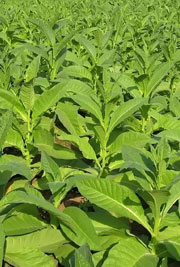 Tobacco leaves contain an addictive chemical called nicotine. The content of nicotine in the cigarette will depend upon the blazon and part of leaf that is used. The higher on the plant the leaf is taken, the greater the nicotine content.
The nearly preferred tobacco foliage in Australia is Virginia tobacco. Virginia tobacco has a high carbohydrate content. While this makes the smoke from the cigarette sweeter it as well produces more than acidic smoke. When the sugars burn a number of harmful acids are produced. In Australia blended tobacco leaf cigarettes are also available.
More than information on Tobacco.
In 1987 labels were added to Australian cigarette packets which detailed the average yield of the main cigarette constituents, nicotine, tar and carbon monoxide, in each cigarette. From the content of tar, the cigarettes were categorised as 'ultra low-cal', 'light' or 'regular'. Information technology was originally believed that low tar cigarettes would reduce the smoker'southward exposure to chancy chemicals. It has since been constitute that the 'light' cigarettes were delivering comparable doses of chemicals, were merely as addictive as regular cigarettes and did not reduce affliction or bloodshed rates amongst smokers. In 2006 the labels were removed when the Australian Competition and Consumer Commission adamant these categories were misleading.
Cigarette smoke
Cigarette or tobacco smoke contains more than 4,000 different chemical compounds which are present in the solid phase, the gas phase or the liquid phase. The chemicals that make up the solid phase are tiny solid particles including phenols, nicotine and naphthalene. The major gases include carbon monoxide, nitrogen oxides and hydrogen cyanide and the liquid vapours include formaldehyde, methyl hydride, benzene, ammonia and acetone. The majority of these chemicals come up from burning tobacco and the rest are a mixture of chemicals from the burning of the cigarette newspaper, the additives and the agricultural chemicals left from farming the tobacco leaves.
The tobacco smoke that comes out of a cigarette is fabricated up 2 types of smoke; side stream smoke from the called-for tip of the cigarette, and mainstream smoke that is delivered to the smoker via the filter or oral cavity finish.
Tar, carbon monoxide and nicotine are the mainstream components of the fume but they are not alone responsible for the deleterious effects associated with smoking and passive smoking. There are at least sixty chemicals in fume which accept been identified every bit carcinogens and 30 identified metals, some of which are radioactive.
Chemic compounds found in all phases of cigarette smoke have been associated with independent negative effects on the smoker, which ways they produce their own separate impairment. These are only some of these chemicals found in cigarette smoke:
-
 Benzene;
 - Benzo(a)pyrene;
- Ammonia;
- Formaldehyde;
- Hydrogencyanide;
- Acrolein;
- Dimethylnitrosamine;
- Non-nicotine alkaloids;
- Aromatic amines;
- Effluvious metals;
- Tobacco specific nitrosamines;
- Hydrogen cyanide;
- Nitrogen oxides;
- Aldehydes;
- N-nitrosamines;
- Ketones;
- Quinine; and
- Polycyclic aromatic hydrocarbons.
These chemical names may not mean very much to most people until they realise where else these chemicals are found and then it becomes evident just how harmful they are. The following is a list of some chemicals institute in cigarette smoke and where else they are found:
-
 Carbon monoxide is i of the substances that is emitted from vehicle exhaust;
 - Nicotine is found in pesticide;
- Arsenic and Dichloro-diphenyl-trichloroethane are used in insect poison;
- Hydrogen cyanide was used in the gas chambers in Globe State of war 2 and is currently used in rat poison;
- Acetone is pigment stripper and is a component of nail polish remover;
- Ammonia is used in household cleaning products;
- Butane and methanol are found in fuel;
- Cadmium is a metal used in auto batteries;
- Phenol is used in fertilisers;
- Naphthalene is a carcinogen used in moth balls; and
- Formaldehyde is used as a tissue and specimen preservative commonly found in science labs.
Nicotine
Nicotine is the addictive component of tobacco products. It exerts its addictive action by stimulating the release of the neurotransmitter dopamine in the brain, which happens within seconds of inhaling. Dopamine is a reward chemical, when it is released smokers experience a pleasurable feeling. Most smokers need to intake from 0.9 to ane.4mg of nicotine per cigarette in lodge to feel satisfied. Nicotine has also been found to:
-
 Alter the regulation of the claret brain barrier which in turn increases fluid (cytotoxic oedema) in the brain. This is believed to be the mechanism behind increased risk of stroke and worsening of stroke outcomes in smokers;
 - Have chancy furnishings on the cardiovascular organisation;
- Contribute to the dysfunction of the walls of blood vessels (endothelium). Nicotine stimulates the production of free radicals which impair the vital ability of the claret vessels to dilate (vasodilation);
- In combination with carbon monoxide, nicotine is also responsible for reducing claret menstruum to your feet and hands, causing peripheral vascular disease (diseases of the arteries and veins of the limbs) which over time may pb to the need for amputation;
- Significantly increase nicotine levels in the brain, even from but brusque-term exposure to 2d-hand smoke;
- Play a role in the induction and progression of coronary heart illness (when the heart muscles become diseased), coronary artery illness (when plaque builds upwards within the arteries) and centre attack. Nicotine also stimulates irregular heartbeats; and
- Stimulates processes which induce loftier blood pressure (hypertension) and arterial stiffness.
Carbon monoxide
Incomplete combustion of carbon-containing substances (such as forest and oil) produces carbon monoxide. In the case of cigarettes the carbon-containing substance is tobacco. Other sources of CO include:
- Cooking stoves;
- Heaters;
- Fireplaces; and
- Engines.
Carbon monoxide causes damage to the lungs by depriving the trunk of oxygen. Oxygen is displaced from haemoglobin (Hb) due to the competitive bounden of carbon monoxide. Hb is responsible for transporting oxygen through the body therefore if oxygen is unable to bind to Hb equally a result of carbon monoxide it will reduce oxygen commitment to tissue. When torso tissues do not have enough oxygen it causes a serious condition called hypoxia. Smokers can accept equally much equally 10 times equally much carbon monoxide in their bloodstream every bit non-smokers. Exposure to big quantities of carbon monoxide is fatal.
Tar
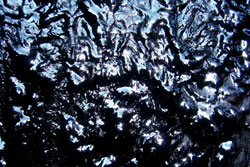 Tar is a mixture of the compounds in cigarette smoke which condensate (turn from a gas to a solid) once in the lungs to form a sticky brown substance, this is the cigarette fume condensate. Tar is the part of cigarette smoke which causes the xanthous-brown stains on teeth and fingers. Tar is made of nitrogen, oxygen, hydrogen, carbon dioxide, carbon monoxide, and a broad range other chemicals.
These chemicals take short and long term furnishings on health. The brusque term effects include cough and shortness of breath.
The detrimental long term effects of tar have been known since the 1950s when tumours grew on mice after their pare had been painted with the tar from cigarettes. The chemicals in tar are the main causes of lung and pharynx cancer amid smokers. Part of the cancer causing effect of tar is considering it interferes with allowed cell cycle progression which results in significant reductions in allowed responses. This in turn increases the incidence of tumours and respiratory tract infections.
The tar that remains in the lung causes cells to die. Some of the cells that are destroyed are cilia. Cilia are little hair-like structures that help move mucous out of the lung. Over time, loss of this cell part can atomic number 82 to emphysema.
While in the past a lot of study and accent has been placed on different force cigarettes, it has since been found that 1 milligram of tar from i cigarette will comprise equal amounts of carcinogens and cardiovascular toxicants as one milligram of tar in the next cigarette. All cigarettes are dangerous and cause serious health consequences for you and those afflicted by the fume from your cigarette.
Cigarette additives
Cigarette additives are used to:
- prolong shelf life;
- control the rate of burning;
- help in cigarette industry;
- control how much nicotine is delivered;
- add flavour; and
- reduce the harshness and irritation of cigarettes.
In that location are five primary types of additives including processing aids, combustion aids, flavours, humectants and nicotine controllers.
Processing aids
 Ammonia compounds, carbon dioxide and ethyl alcohol are used to make the cured tobacco less brittle and therefore make it easier to manufacture.
Combustion aids
Ammonium, sodium phosphate and sodium and potassium citrate are used to care for the cigarette paper which works to command the rate at which the cigarette papers burns. Additives are likewise used to control the temperature of the burning cigarette.
Humectants
Humectants include sugars, glycerine and glycol compounds. They are used to keep the tobacco moist.
Nicotine controllers
Additives are used to aid the commitment of target doses of nicotine. Nicotine's addictive potential tin can also be increased with the addition of ammonium salts and acetaldehyde.
Flavours
Liquorice, cocoa, honey, fruit spices or fruit extracts can be used to meliorate the taste of cigarettes making them more palatable and appealing, specially for offset-fourth dimension smokers. Chemicals contained in liquorice, java and cocoa dilate the airways and as a result the smoker will achieve greater doses of nicotine and tar. Menthol tin numb the pharynx and brand the smoker less enlightened of the harsh effects of the smoke and even promote a feeling of "freshness" in the mouth after a cigarette. All flavours, especially sugars, mask the noxious taste of tobacco and the bitter taste of nicotine.
Additives are regarded every bit "safe" substances by tobacco industries. Even so, what needs to exist taken into account is that these ingredients are inhaled into the lungs rather than ingested, which is not safe. Furthermore, additives comprise chemicals whose effects may not be harmful if ingested individually simply when added to cigarettes can heighten the powerful addictive effects. For instance, some additives stimulate nicotine receptors and therefore render smokers' brains more receptive to the addictive effects of the chemical. Additives assistance in making the cigarette an bonny selection which increases the difficulty of quitting.
 Cigarettes are not classified as drugs or food and therefore do not have standards placed on them in order to control the agricultural chemicals that are used in farming the tobacco and the amount of chemicals that are left on the constitute once they accept been farmed. Agriculture additives may include fungicides, fertilisers, insecticides and herbicides.
Currently tobacco companies in Australia take a Voluntary Agreement with the Authorities Department of Wellness and Aging which protects manufacturer's trade secrets. The authorities has a listing of the ingredients in each make of cigarettes just under the agreement this information is not made public.
Flavoured cigarettes
At that place are some cigarettes which are designed to exist dominated by a flavour. Menthol and confectionary/liqueur cigarettes are the two major flavoured varieties.
Flavoured cigarettes tin mask the intensity of the tobacco to an extent that smokers will retain the smoke for longer without breathing out and as a consequence receive greater levels of nicotine. The harshness of the tobacco fume is also masked which makes it easier to tolerate cigarettes and less likely to recognise the dangers of smoking.
Currently fruit and confectionary cigarettes are banned in a number of Australian states and it appears that other states will follow adjust.
More information
 | For more information on smoking and its health furnishings, and some useful tools, videos and animations, see Smoking. |
References
- Tar Information Sheet [online]. Quitnow 2006 [cited Jun 2010]. Available from: URL: http://www.quitnow.info.au/internet/quitnow/publishing.nsf/Content/tar
- Stellman SD, Djordjevic MV. Monitoring the tobacco use epidemic Two: The agent: Current and emerging tobacco products. Preventive Medicine. 2009; 48(1 Suppl): S11-five.
- Adamopoulos D, Argacha JF, Gujic M, Preumont N, Degaute JP, van de Borne P. Acute effects of nicotine on arterial stiffness and wave reflection in healthy young not-smokers. Clin Experiment Pharmacol Physiol. 2009; 36(8): 784–ix.
- Paulson JR, Yang T, Selvaraj PK. Nicotine exacerbates brain edema during in vitro and in vivo focal ischemic conditions. J Pharmacol Exper Therapeut. 2010; 332(2): 371-9.
- Department of Health and Ageing. Fact Sheet: How smoking harms your health [online]. Australian Government Department of Health and Ageing. 2004 [cited Jun 2010]. Bachelor from URL: http://www.health.gov.au/cyberspace/chief/publishing.nsf/Content/D87C1389F867B087CA25774B007C58E2/$File/tobharm.pdf
- Yee Be, Ahmed MI, Brugge D, et al. Second-manus smoking and carboxyhemoglobin levels in children: a prospective observational study. Pediatr Anesthes. 2010; twenty(1): 82–9.
- Palozza P, Serini South, Trombino Southward, Lauriola 50, Ranelletti FO, Calviello G. Dual role of b-carotene in combination with cigarette smoke aqueous extract on the formation of mutagenic lipid peroxidation products in lung membranes: dependence on pO2. Carcinogenesis. 2006; 27(12): 2383–91.
- Frazer-Abel AA, McCue JM, Lazis S, Portas M, Lambert C, Freed BM. Cigarette tar phenols impede T prison cell cycle progression by inhibiting cyclin-dependent kinases. Molecular Immunology. 2007; 44(4): 488-93.
- Balakumar P, Kaur J. Is nicotine a key player or spectator in the induction and progression of cardiovascular disorders? Pharmacol Research. 2009; sixty(5): 361-8.
- Tobacco in Commonwealth of australia: The construction and labelling of Australian cigarettes [online].The cancer council, 2010 [cited Jun 2010]. Available from: http://www.tobaccoinaustralia.org.au/chapter-12-tobacco-products/12-3-labelling-of-tar-nicotine-and-carbon-monoxide
- Action in smoking and wellness: Essential information on what's in a cigarette [online]. ASH 2010 [cited June 2010]. Available from: world wide web.ash.org.uk
- Background cursory: What'southward in cigarettes [online].Quit 2003 [cited July 2010]. Available from URL: http://www.quit.org.au/downloads/BB/05What.pdf
- The truth: What's in a cigarette? [online] MDSI 2008 [cited July 2010]. Bachelor from URL: http://world wide web.mdsi.org.au/smoking_matters/SmokingMattersA4Flyer_Web.pdf
- Make smoking history: Cigarette ingredients [online]. Cancer quango WA, 2009 [cited July 2010]. Available from: URL: http://www.cancerwa.asn.au/resources/2009-12-22-Cigarette-ingredients.pdf
- Ipsos-Eureka social research institute: Cigarette ingredients and emissions disclosure [online]. Department of health and aging, 2009 [cited July 2010]. Available from: URL: http://world wide web.wellness.gov.au/internet/principal/publishing.nsf/Content/
Source: https://www.myvmc.com/lifestyles/whats-in-a-cigarette/

ارسال یک نظر for "What Are 5 Ingredients That Can Be Found in Most Cigarettes"